
Comparison
Two honest philosophies. We picked the one with a person at the gate.
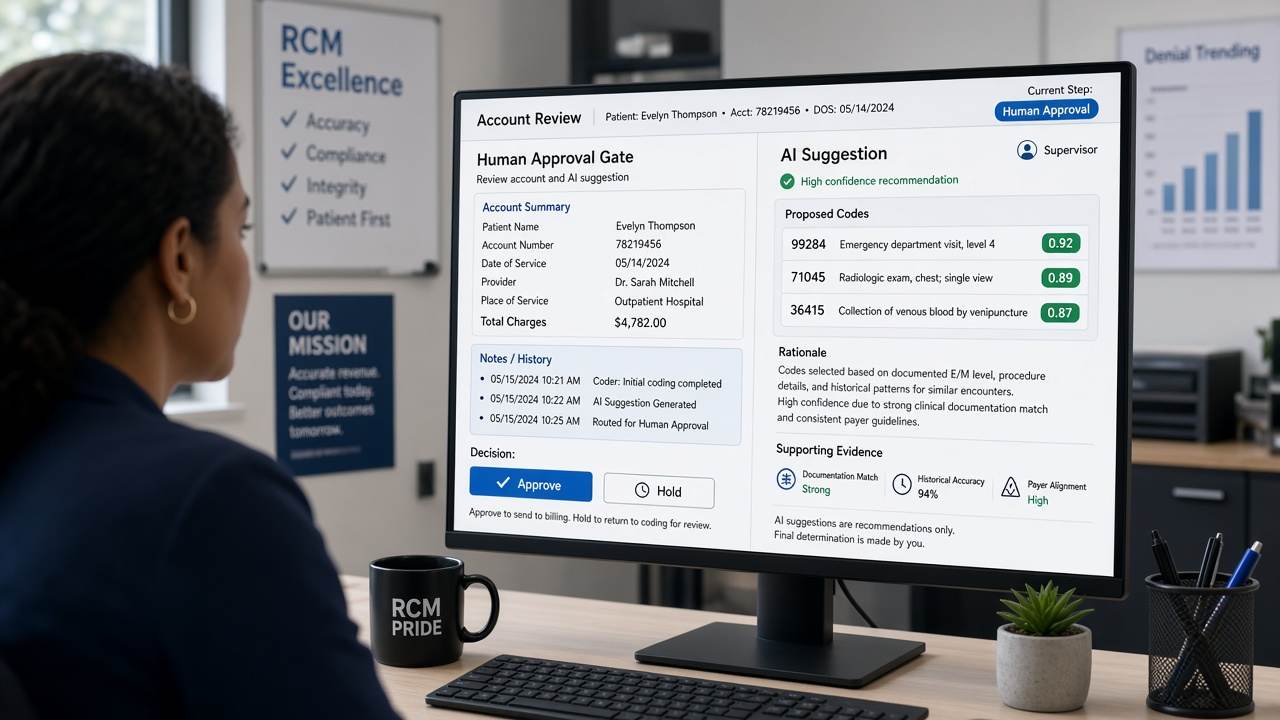
Some tools aim for claims that go out with no human touch at all. That's a legitimate goal for organizations that accept model-driven submission risk. Medical billing companies are usually accountable to client practices for every 837 that leaves the building — so MEDBIX keeps AI in a propose role: eligibility explain, coding suggestions, scrub findings and denial patches stay visible, and a named person still opens the approval gate before anything reaches the clearinghouse.
Fair look at Fully autonomous AI billing tools vs MEDBIX — sample product view on the right.
CLM-24-08812 · J. Alvarez · Lakeview Ortho
Scrub results
Lines
Matrix
Side by side
How fully autonomous ai billing tools and MEDBIX handle the same jobs.
Who submits
- Fully autonomous AI billing tools
- The software, often without review
- MEDBIX
- Your team, after required approval
Role of AI
- Fully autonomous AI billing tools
- Decides and acts
- MEDBIX
- Explains, suggests, prioritizes
Scrubbing
- Fully autonomous AI billing tools
- Often model-driven
- MEDBIX
- Deterministic rules first, AI explains
Corrections
- Fully autonomous AI billing tools
- Can be automatic
- MEDBIX
- Applied to drafts after a person accepts
Accountability
- Fully autonomous AI billing tools
- Shared with the vendor's model
- MEDBIX
- Named person on every approval
Visibility into AI
- Fully autonomous AI billing tools
- Varies
- MEDBIX
- Activity feed of every proposal and decision
Compliance story
- Fully autonomous AI billing tools
- Harder to show who decided
- MEDBIX
- Audit log with person + timestamp
- You want the minimum human involvement possible
- You're comfortable with model-driven decisions on claims
- You're accountable to clients for every claim
- You want AI help without giving up sign-off
- You need to explain decisions to auditors
Being straight with you
Features that make the difference
Overview
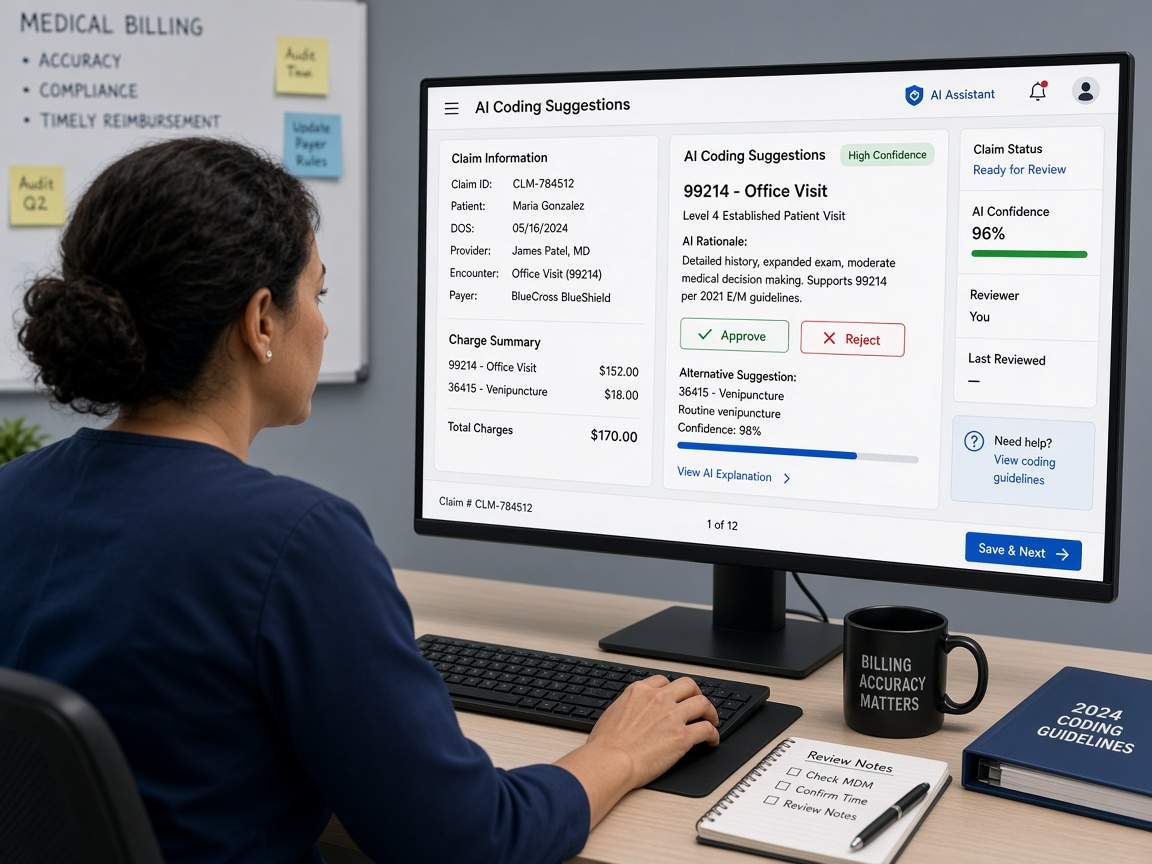
Biller reviewing AI suggestions before human approval
Overview
Two honest philosophies. We picked the one with a person at the gate.
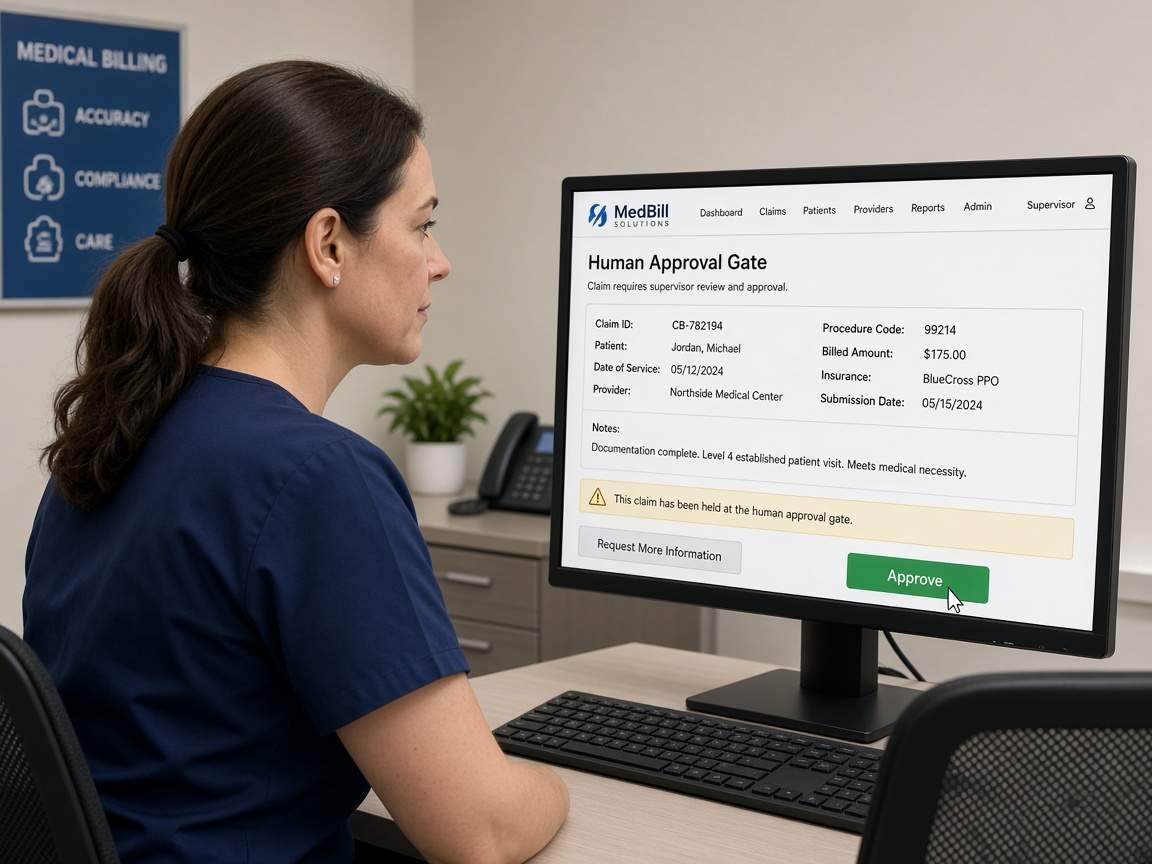
Some tools aim for claims that go out with no human touch at all. That's a legitimate goal for organizations that accept model-driven submission risk. Medical billing companies are usually accountable to client practices for every 837 that leaves the building — so MEDBIX keeps AI in a propose role: eligibility explain, coding suggestions, scrub findings and denial patches stay visible, and a named person still opens the approval gate before anything reaches the clearinghouse.
Proof points
- Who submits: Your team, after required approval
- Role of AI: Explains, suggests, prioritizes
- Scrubbing: Deterministic rules first, AI explains
Being fair
Supervisor at the human approval gate before claim submit
Being fair
When fully autonomous ai billing tools is the better fit
You want the minimum human involvement possible You're comfortable with model-driven decisions on claims
Proof points
- You want the minimum human involvement possible
- You're comfortable with model-driven decisions on claims
Fair comparison
Isn't human review slower?
It adds a quick review step and removes much slower rework later.
Will MEDBIX ever auto-submit?
Not as a design goal. The approval gate is the product.
Where does AI help most?
Explaining 271 responses, suggesting codes, clarifying scrub findings and proposing denial fixes grounded in your past wins.
Next step
Get a written quote for your book.
Practice count and claim volume drive the number. No public price grid — you get a proposal that matches how you operate.